For Turkish exporters, e-commerce sellers and SMEs that need a warehouse or logistics presence in Germany: from choosing the right location to your customs position and the legal side of setting up a company — we can help you navigate it.
Many Turkish companies entering the German market pause at the same threshold: faster delivery within Europe, fulfilment, and a solid customs position all call for a physical warehouse presence in Germany — yet what it costs, which region to pick, and how to set it up legally are usually unclear.
These decisions are connected: the region affects your transport cost, and the legal setup affects which providers you can work with. This page outlines what's worth knowing before you decide, in a neutral frame.
Warehouse costs can't be reduced to a single number; they vary noticeably with two things.
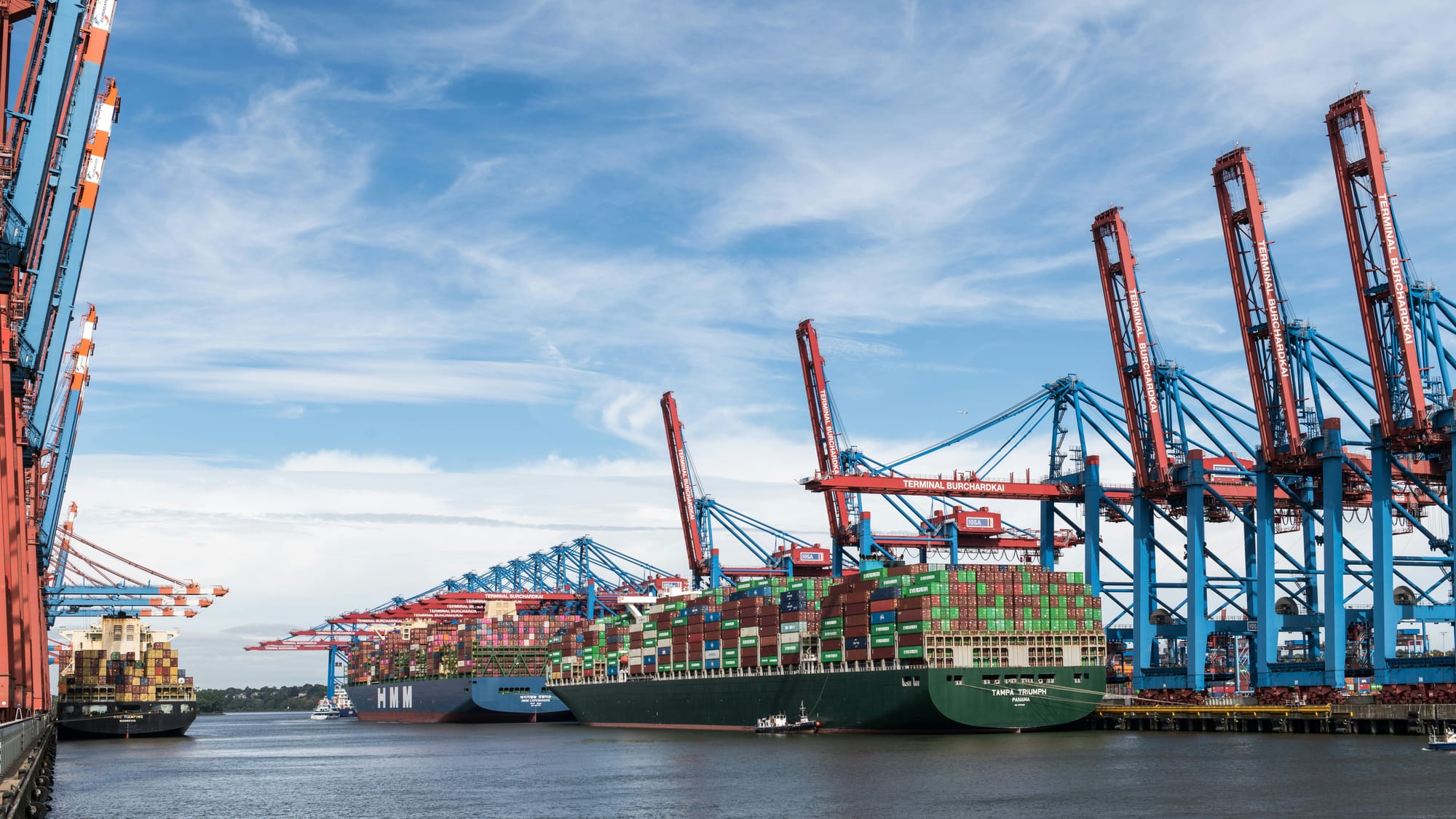
A port- and customs-adjacent location such as Hamburg carries a different cost profile than a logistics hub in the middle of Europe such as North Rhine-Westphalia (NRW).
There is a real difference between storage only and full service including inbound/outbound handling and value-added handling.
We don't publish prices on this page. Prices are shared on request and depend on volume, contract term and scope. Let us put together the current price list that fits your operation.
Request the price listFor import/export-heavy operations, proximity to a port and to customs is not a matter of comfort — it is a matter of cost and speed. A warehouse close to the point where goods clear customs on entry into Germany shortens transport legs and waiting times.
This is where a Zolllager (bonded warehouse, i.e. a customs warehouse) comes in: a storage regime under customs supervision where import duty and import VAT can be deferred until the goods are released into free circulation. For goods that enter Europe but may partly be re-exported, this can matter for cash flow. Whether a bonded-warehouse setup fits your case is a technical question to be assessed together with a customs advisor; we help you ask the right questions and get you to the right specialist. This section is informational only.
When it comes to commercial premises for a GmbH (German limited-liability company), there are a few essentials foreign companies should know. For most new operations, leasing (Gewerbemiete) is the first choice because it keeps capital free and offers flexibility; commercial leases in Germany are often long-term with strict terms, so the duration, termination and assignment clauses deserve careful reading.
Buying is a different decision — higher capital, real-estate transfer tax (Grunderwerbsteuer) and notary processes — and usually comes up once the operation is established. Our role is advisory: we help clarify what to ask and what to watch for.
The same logic applies to commercial premises beyond warehousing — offices, production or workshop space, or mixed-use sites. For most companies the priority is warehousing and logistics, but office or production space can become relevant as the operation grows.
Our role is to simplify the complex part of the move from Türkiye to Germany for you.
We weigh the location logic (Hamburg port area vs. NRW logistics hub) and the leasing and customs options together with you.
Get in touch →We point you to trusted logistics and warehouse partners — the ones that fit your scale and type of operation.
Get in touch →We make clear how company setup, becoming a contracting party and customs positioning connect, and stay with you through the whole process.
Get in touch →No. Your GmbH's registered address and your warehouse location are completely independent. Goods can be stored anywhere in Germany; the warehouse should be chosen by logistics logic — proximity to a port, customer distribution and cost — not by where the company happens to be registered.
For import/export-heavy operations Hamburg (port and customs) makes sense, while for domestic distribution NRW (a logistics hub) is a genuine strategic choice.
In most cases warehouse and logistics providers prefer — or require — a German contracting entity (a GmbH) rather than contracting directly with a foreign company, for liability, billing and customs reasons. This is one of the practical reasons many Turkish companies establish a German GmbH first.
The right sequence is usually company first, warehouse second. We can clarify together which step should come first in your case.